Support

How Technology Is Impacting the Mining Industry

Statistics show that every individual born in the U.S. will need 2.96 million pounds of minerals, metals, and fuels from mining operations in their lifetime. With such a high demand for mineral commodities, it makes sense that the number of technological innovations in the mining industry has grown so drastically through the years.

Considerable technological growth in the mining industry and the increasing need to refocus shared value achievement efforts have led to a rapid shift toward automation and other technological advances in the field. These changes will increase productivity while lowering labor costs.

This article will review how technology has impacted the mining industry throughout history and deliver a brief overview of the current state of technology in this field.

How Has Technology Affected the Mining Industry?

New technological innovations in the mining industry have delivered ground-breaking benefits to the field over the years, such as:

  • Increased Productivity: As mining companies integrate more advanced technologies into their processes, they experience more efficient operations and improved performance. Greater technologies also enable these organizations to limit spending and boost labor productivity.
  • Higher Throughput: In many mines, the introduction of solutions like analytics systems has resulted in a global optimum rather than a local optimum, ultimately increasing yield energy throughput for mining organizations. As a result, these technologies raise minimal recovery
  • Maintenance Optimization: Technology has helped mines improve maintenance by conducting it on an as-needed basis instead of on a fixed schedule. It has also enabled workers to stay informed on maintenance history and work orders and even predict equipment failures before they occur.
  • Improved Safety: Automated mining technologies have improved job site safety by taking on operations in dangerous working conditions so that miners don’t have to. Tools like smart sensors have also minimized the frequency of health and safety incidents and injuries.
  • Fewer Operating Costs: In the mining industry, automated technologies have reduced labor and maintenance costs with continuous operation and less variability.
  • Minimized Environmental Harm: Mining technologies have allowed workers to extract mining materials with minimal environmental impact. They have also led to reduced energy consumption.

Most Popular Mining Technologies

Mines have leveraged new technologies for decades, resulting in a comprehensive assortment of widely utilized solutions in the industry today.

These technologies have heavily contributed to the growth and progression of the mining operations, leading to more significant mineral commodities and overall productivity.

While there are dozens of technological innovations and equipment types that play a role in the mining industry, a handful of products are prevalent across many mining companies. Let’s take a look at these products and how technology has helped mining.
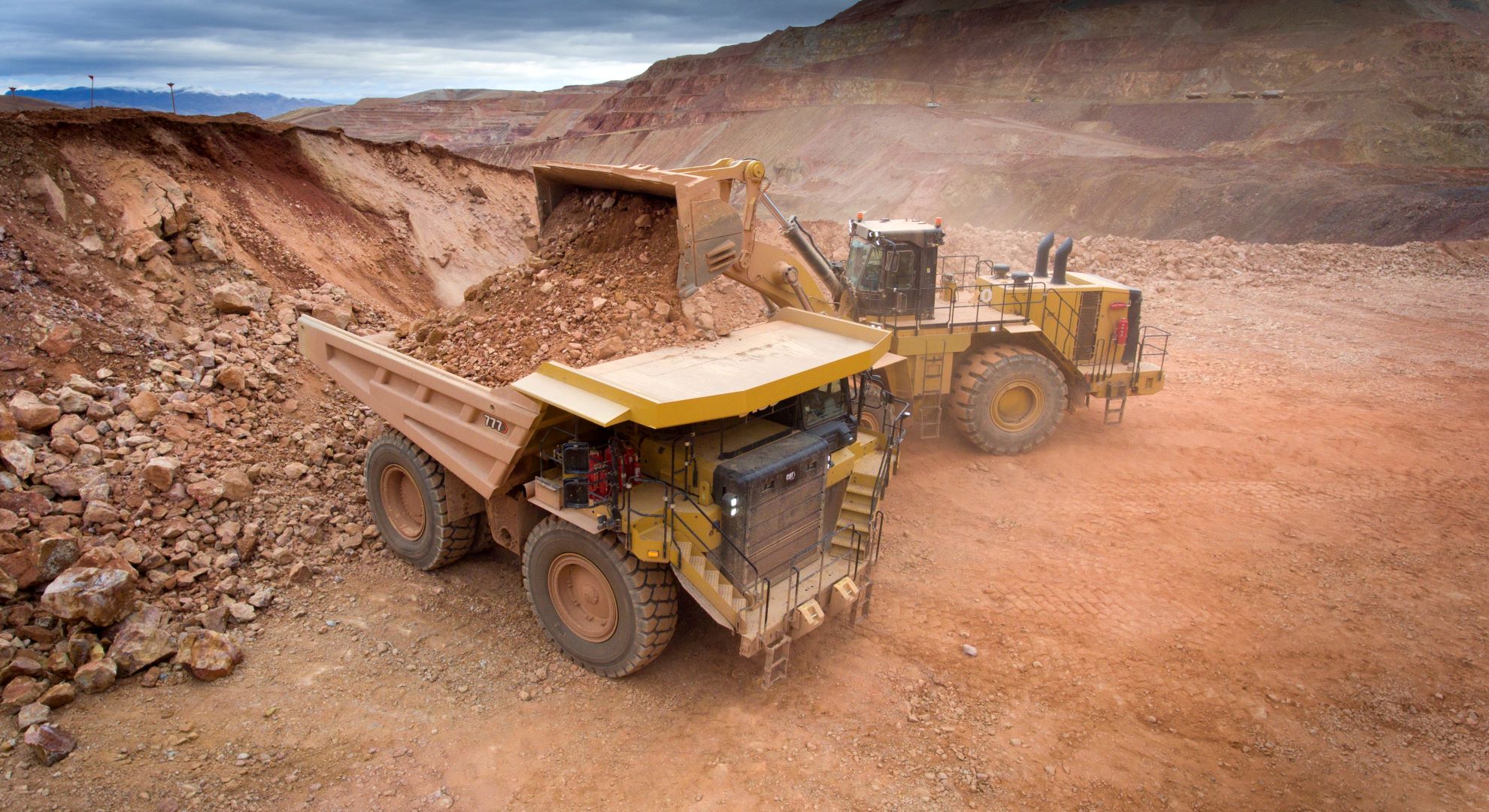
    • Artificial intelligence (AI) solutions in mining use smart data and machine learning to improve mining production, efficiency, and safety. These technologies allow companies to generate data in half the time than what has been previously seen in the field, enabling companies to improve decision-making with faster and more accurate data-driven insights. As a result, the AI technologies’ machine-learning capabilities are heavily influencing how mines make decisions for the future.

      The use of AI in the mining industry has helped companies more easily locate minerals using these high-performance technologies. AI has also led to the popularization of autonomous equipment, such as vehicles like self-driving trucks equipped to navigate narrow tunnels with ease. Drilling systems have also been impacted by AI, simplifying them to the point of requiring only one operator.

      Artificial intelligence in mining has ultimately helped minimize costs, reduce environmental impact, and improve safety and reliability.

      • Automation is one of the most prominent technological trends in mining. Automated technologies enable mining companies to work around the clock and maximize input use and productivity.

        These advancements were inspired by the need for increased productivity, health, and safety. With automated equipment like mining trucks, which have been around for approximately two decades, fewer workers are directly exposed to minerals and hazardous materials. Because mining automation allows workers to control and interact with machinery remotely, they’re ideal for use in underground mines and other high-risk environments.

        While most of today’s mining technologies are only semi-autonomous, the field is focused on moving toward autonomous mining systems that can perform tasks automatically or with minimal intervention from external forces and fully automated robotics.

        Common types of automated mining technologies include:

        • Trucks
        • Site Monitoring
        • Drilling Systems
        • Ventilation Systems
        • Long-distance trains
        • Global Positioning Systems (GPS) are navigation and positioning systems that mining companies use to generate three-dimensional (3D) images of their equipment locations on moving map displays (MMDs). When operators can see where their machines, tools, and devices are, they can better navigate, operate, and position them from remote locations. GPS technologies are also built durably to withstand the extreme environmental conditions of the mines.

          • Similar to GPS technologies, geographic information systems, or GIS, are integral for discovering geographic relationships on the jobsite and determining how they impact the environment. These systems create geospatial data that depicts an object’s shape, size, and location.

            In visualizing this data, mining companies can gain insights into their real-life mine environments and systems, enabling them to facilitate:

            • Report generation
            • Mineral exploration
            • Tailing and facility management
            • Geochemical and hydrology information
            • Regulatory compliance
            • Sustainability
            • Wearable technologies with workforce tracking capabilities have become prominent technological innovations in the mining industry. These tools maximize worker management to improve safety and minimize accidents.

              Workforce tracking devices improve operator safety in mines by enabling radio frequency identification (RFID) personnel monitoring and visibility in real-time, allowing workers to be tracked and located instantly in case of emergencies. In these situations, companies can improve incident response times with immediate notifications. They can also restrict access to certain areas to prevent accidents and ultimately minimize safety hazards.

              Workforce tracking technologies are also valuable for machine inspections and field maintenance by improving operator-based care.

              • Remotely piloted drones and other unmanned aerial systems have many essential uses in the mining industry. These technologies improve mine site efficiency and quarry management by providing accurate site condition data. They are often used to surveil and map out areas, measure inventory, create tune-lapse operation records, and manage business assets.

                Other typical applications of drones in mining include:

                • Safety Management: Drones collect visual data of hazardous areas with deep or high terrain to reduce the risk of exposure to these dangers.
                • Surveilling and Mapping: Miners use drones to take images of open-pit mines and quarries. Then, they use photogrammetry software to generate 3D renderings with these images, which companies often use to make realistic topographical maps, digital terrain models, and more to monitor site changes over time.
                • Stockpile Management: Stockpiles create complications for mining companies due to their changing areas and heights, making it challenging to estimate their volume. Drones resolve this issue by flying over stockpiles and using advanced software to generate calculations, models, and measurements.
                • Tailings Dam Management: Mining companies often use drones to accurately measure tailings dams instead of surveilling them manually to ensure structural integrity.
                • Drilling and Blasting: With drones, companies can create 3D surface models and reconstructions of areas they’re preparing to blast or drill. Afterward, they can use photometry and thermal imaging software to ensure there are no hazardous material shifts and compare surveys to improve planning for future blasts.
                • The mining industry uses many geospatial data technologies to aid in environment visualization, including the following software types:

                  • Three-dimensional Modeling: 3D modeling technologies generate life-like impressions of mines using depth perception to reimagine these environments and help companies better understand them.
                  • Virtual Reality: This type of mining technology creates an artificial environment using real-life data to immerse miners and prepare them to take on new mining environments.
                  • Augmented Reality: Augmented reality technology overlays digital imagery onto a real environment by using computer-generated materials, such as video, sound, graphics, and applications. Mining companies use this technological concept in virtual simulators to train miners and reduce equipment costs.

                  When the mining industry uses these spatial data technologies, it gains more significant insights into mine systems at a lower cost with minimal environmental impact.

                The Future of Mining Technology

                With so many emerging technological innovations in the mining industry, it comes as no surprise that this field is projected to continue growing and optimizing its processes. Many current mining technologies and trends are expected to continue impacting the industry in the future.  

                Digitalization and Big Data

                With automated technologies, companies will be able to collect and analyze data to make the most informed decisions regarding the production process, predictive maintenance, mine conditions, and inventory management, to name a few.

                Sustainability and Waste Prevention

                One trend that’s expected to influence mining technologies heavily in the future is environmental sustainability. Significant components of the sustainability movement include waste reduction and energy efficiency.

                Optimal use of mining equipment and technologies in the future can drastically reduce water consumption and emissions. In addition, mining companies will strive to minimize environmental impact on fragile or ecologically challenging settings.

                Battery-Electric Vehicles

                Electronic vehicles are helpful in improving safety and reducing the risk of collisions in the workplace. These machines also reduce harmful emissions and the amount of ventilation required to function, making them ideal for underground mining environments. With these innovations, the mining industry can expect to see lower costs, minimal power consumption, reliable operation, and safe underground movement.

                Digital Twins

                Digital twins are virtual replicas of physical systems, processes, and aspects that act as a representation of the dynamics and elements of Internet of Things (IoT) devices. These devices are used within the system or space depicted. They use artificial intelligence, machine-learning capabilities, and software analytics and data to generate real-time digital models that update according to their real-life counterparts.

                Digital twins enable miners to assess engineering data and discover areas that require better monitoring or data rendering. With these insights, companies can direct their efforts toward areas of maximum need and impact.

                Internet of Things

                Internet of things is a network of physical objects like equipment, sensors, and other data sources. All interconnected network elements are able to interact with one another, exchange information, and act in coordination with one another. They enable low-cost network establishment in the mining industry while capturing real-time data from equipment and machines across mining operations. With this information, companies can support the decision-making process, conduct integrated control and planning, and consider different operational units.

                Find The Right Technology With

                EMPIRE CAT MINING

                Empire offers a suite of best-in-class technology solutions to help you operate more safely, efficiently, and productively in the mines. Discover why MineStar Solutions is the leading provider of mining technology solutions ― including full autonomy. To learn more and get started with the newest mining technology, connect with one of our mining specialists.

                CONTACT US

                Related Topics