Equipment
Guide to Choosing a Power Generation System for Your Business
If your business recently experienced a power outage, you already know firsthand how valuable electricity is. To avoid closing up shop and keep powering through an outage, a commercial generator could be for you. Not sure where to begin? Follow our guide to choosing a power generation system.
Why Your Business Needs a Backup Generator
If you’re not convinced a standby power supply is for you, check out these reasons why your company needs a backup generator:
To Avoid Downtime
Of all the reasons your company needs a backup generator, maintaining productivity is the most critical. Downtime is costly in any industry. For manufacturers, a power outage shuts down vital machinery. It brings a bustling factory floor to a grinding halt. A call center becomes unable to make or receive calls. Even an hour or two of dead air can cost you customers. Retailers can’t checkout customers or light their stores. Restaurants can’t cook, hotels can’t host guests, and other businesses must stop serving customers. In a regular office environment, computers and phones shut down.
No matter your business, downtime is costly. Even when a disruption doesn’t completely shut down your business, your employees will be less productive. You’ll keep feeling those effects after the power returns as employees address the backlog left behind during the outage. The average four-hour power outage costs businesses anywhere from $10,000-$20,000, and the number only goes up as downtime increases.
With a backup generator, your business can stay busy even during an extended power outage. It can power your most essential equipment or an entire facility, depending on your needs.
To Maintain Security
Another reason why your business needs a backup generator is protection. If your company has an electronic access system, security cameras, automatic alarms or even just lights around the perimeter, you rely on electricity to keep your assets safe. A lapse in your security system could be just the thing thieves are waiting for. Keep your security system running 24/7 with a standby generator.
To Protect Data
Besides your physical security, you must also think about your digital security. When computers shut down unexpectedly, they may lose data. Any unsaved documents will be lost. When complicated programs run, you might lose even more data. It’s common for files and hard drives to become corrupted when programs and devices quit unexpectedly.
In the information age, digital data is your company’s greatest asset. It holds customer contact or payment information and assets like schematics, blueprints or graphic designs. In sectors that work with sensitive information, like the financial and health care industries, corrupted data can be an even more significant loss. If you work with valuable data, even a blink in power is unacceptable. You’ll need more than just a portable generator to avert these crises. A standby generator combined with an uninterruptible power supply can kick on without interruption.
To Prevent Product Loss
In certain businesses, a power outage creates product loss. In agriculture, a power outage can shut off the lights and air handlers in plant nurseries, compromising the growing conditions. Or, maybe a power outage coincides with a time-sensitive operation, such as watering plants or harvesting. It could ruin an entire crop.
In manufacturing, the outage could shut down operations in the middle of production, interrupting processes. Maybe a device doesn’t reach the right temperature, or a freshly-applied adhesive or coat of paint dries out before the power comes back on.
Other industries have to worry about their refrigerators going out. Food processing facilities, grocery stores, restaurants, and hotels can lose everything in their freezers and refrigerators. Having a backup generator providing power can help you avoid these losses.
To Continue Communicating
Especially during a power emergency, communication is critical. You need to maintain contact with many employees, departments, and essential operations to give directives and carry out a business continuity plan. During a natural disaster, your business needs a “central command” to respond effectively to a developing situation.
Meanwhile, your customers are counting on you. If you provide essential products and services, your customers may rely on you during an outage. Keeping the phone lines running lets your customers contact you and find out if you’re open. If your business serves people all over the country, customers unaffected by the outage expect business as usual. They want their questions answered and their needs met. A generator can power your computers and phones to maintain contact with them.
Factors in Choosing a Power Generation System
Once you decide your business needs a standby or emergency generator, the next step is selecting the right one. As your personal guide to buying a commercial backup generator, we recommend you consider these factors:
- Output Wattage Size: Your generator needs to accommodate a specific wattage output, depending on how much you want to power. Some businesses can calculate their size requirements through their square footage. Others may need to look at the wattage in their normal conditions alongside the wattage required to startup equipment after a power failure. It’s best to consult a licensed electrician when determining the wattage and generator size needed for your facility.
- Fuel Type: Generators can run on a few different fuel types, and each has certain advantages. You’ll want to factor in the fuel’s cost, availability, and ease of storage when choosing a type of generator for your business.
- Power Phase: Commercial generators can be either single-phase or three-phase, each providing power in waves. A single-phase generator has a single wave, starting at zero, moving to its peak, and dipping back down to zero. Single-phase is the type of power most homes receive and is sufficient for many small businesses. Other businesses need a three-phase generator, delivering energy in three waves, each peaking at a different point for a consistent power supply at a higher voltage.
- Availability of Service: When you buy a standby generator, you expect it to work when you need it. To reap the benefits of a generator, you need regular maintenance to keep the system running. You want a brand that’s easy to maintain and a responsive supplier who can schedule service when you need it.
- Location: Some companies install their generator outdoors, and others set it up indoors. Depending on your designated area, you may need to consider the generator’s noise level, vibrations, and exhaust.
- Price: A generator is a crucial asset, letting you keep your business open and bringing in revenue even during a power outage. Still, every business needs to weigh the upfront investment against the long-term benefits and find an option that fits their price range.
Different Generator Fuel Types
Choosing the fuel type for your generator is one of the most important decisions you’ll have to make. Since fuel is one of your primary ongoing costs in owning a generator, you’ll need to find the right one for your business. The fuel can also affect your generator’s reliability.
DIESEL
Diesel is the most widespread fuel used for commercial generators. Diesel is a preferred fuel source for many commercial and industrial applications because it’s less flammable than gasoline. Also, since diesel combusts more of its volume, it’s more fuel-efficient.
Advantages
-
Stable fuel source
- High combustion volume
- Fuel is plentiful
- Retain value at resale
- Performance and power output
Disadvantages
- Harmful exhaust
- Produce considerable noise
- Higher initial cost
- Fuel prices fluctuate with the seasons.
GASOLINE
Gasoline is the preferred fuel type for portable generators, but it’s a bit unusual for commercial standby generators. Since it’s more flammable than diesel, gasoline requires precautions. When comparing gasoline and diesel generators, take the time to weigh the advantages and disadvantages of each.
Advantages
- Familiar fuel and operation
- Fuel is widely available
- Lower initial cost
Disadvantages
- Highly flammable and combustible
- Increased prices
- Prices are unpredictable
- Engines are more complex
- Limited size and power output.
NATURAL GAS
Unlike liquid diesel and gasoline, natural gas is gaseous. While it’s even more explosive than gasoline, it burns cleanly, and the main byproduct is water. It’s also the only fuel available through a utility grid. If you have a natural gas generator, you’ll power it with a natural gas pipeline.
Advantages
- Cleaner-burning fuel source
- Fuel is low-cost by volume
- Low investment in storage
- Low maintenance
- Predictable fuel cost
Disadvantages
- Less torque and horsepower
- Highly explosive
- Faster depreciation
- Supply shortages
- Emerging technology
Choosing the Right Size Generator
One of the most common questions we get about generators is, “What size commercial generator do I need?” When sizing your commercial generator, it’s smart to involve an experienced generator dealer or a licensed electrical contractor. Choosing the right size commercial generator is more complicated than sizing a residential generator. First, you must decide what you plan on powering during an outage. Some businesses may run their entire operations using a standby generator. Others will pick their most essential functions.
Next, look at your monthly utility bill. Your statement usually lists your peak demand. Compare your peak demand over the last year, and select your highest peak. With that number as your base, add at least 25% to your total wattage to account for reserve power. If you plan to pick and choose what to power, have an electrician determine the wattage for each of these items.
Another way to estimate your size is with your building’s total square footage. Assuming your facility has typical power usage requirements, you can use this simplified commercial generator sizing guide:
- For Retailers: Your required kilowatts (kW) = 50 kW + 10 watts per square foot.
- For Commercial Office Spaces: Your required kW = 30 kW + 5 watts per square foot.
Note this formula is a general estimate. Your electrician or generator dealer can determine a more accurate sizing estimate. As you calculate your power load requirements, never use amps. If your equipment gives you a load requirement in amps, convert that number to kW before calculating your generator size.
It’s also crucial to remember it takes more power to restart equipment that shut down during an outage than it takes to run it continuously. Your generator needs to be big enough to power equipment while it’s starting up. Another factor influencing generator size is the National Electrical Code. The NEC and your local building codes have specific rules governing size requirements for emergency system generators, legally required generators and optional standby generators. It also includes particular regulations for health care facilities.
Does It Makes Sense to Rent?
It usually makes more sense to buy a commercial generator. Power outages are unpredictable, and it’s much more convenient for businesses to have the power kick right on whenever it’s needed. When comparing the cost to buy vs. rent backup generator power, it’s usually not much different. Plus, when renting a generator, your business needs to account for the uptick in demand and rental costs that may come with a long-term power outage.
However, a few cases when you should rent a commercial generator include:
As an Emergency Response
If your business can’t justify a permanent generator for whatever reason, you might plan to rent a generator during power emergencies. This method works more effectively when you have a well-defined business continuity plan. That means you know exactly who to call and how quickly you can get the rental set up. It also accounts for the many other businesses that may be renting them, limiting local supply. A company using this method will rent and set up a generator before an expected storm.
Before a Planned Power Outage
In certain areas where natural disasters are more likely, utility companies announce power outages in advance. It allows them to prevent electrical fires or dangers from downed power lines. If your local power company has scheduled an upcoming outage and you haven’t invested in a permanent generator, now is an excellent time to rent. However, if your utility company does this somewhat regularly, consider buying a commercial generator soon.
For Special Events
Certain situations increase your power load requirement in the short term. If you host a special event like a yearly conference, holiday party or festival, it might make sense to rent a generator to cover the additional power requirements for the event’s duration. However, if you host frequent events, like a wedding every weekend, it’s best to factor in these power load requirements as part of your regular usage.
When Upgrading Your Electric Equipment
If you don’t have a permanent generator installed, it may make sense to rent one short term when having electrical work done on the building. A rented commercial generator supplies your facility with all the power it needs while your electrician has complete freedom to make the upgrades safely.
PREPARE WITH EMPIRE POWER SYSTEMS
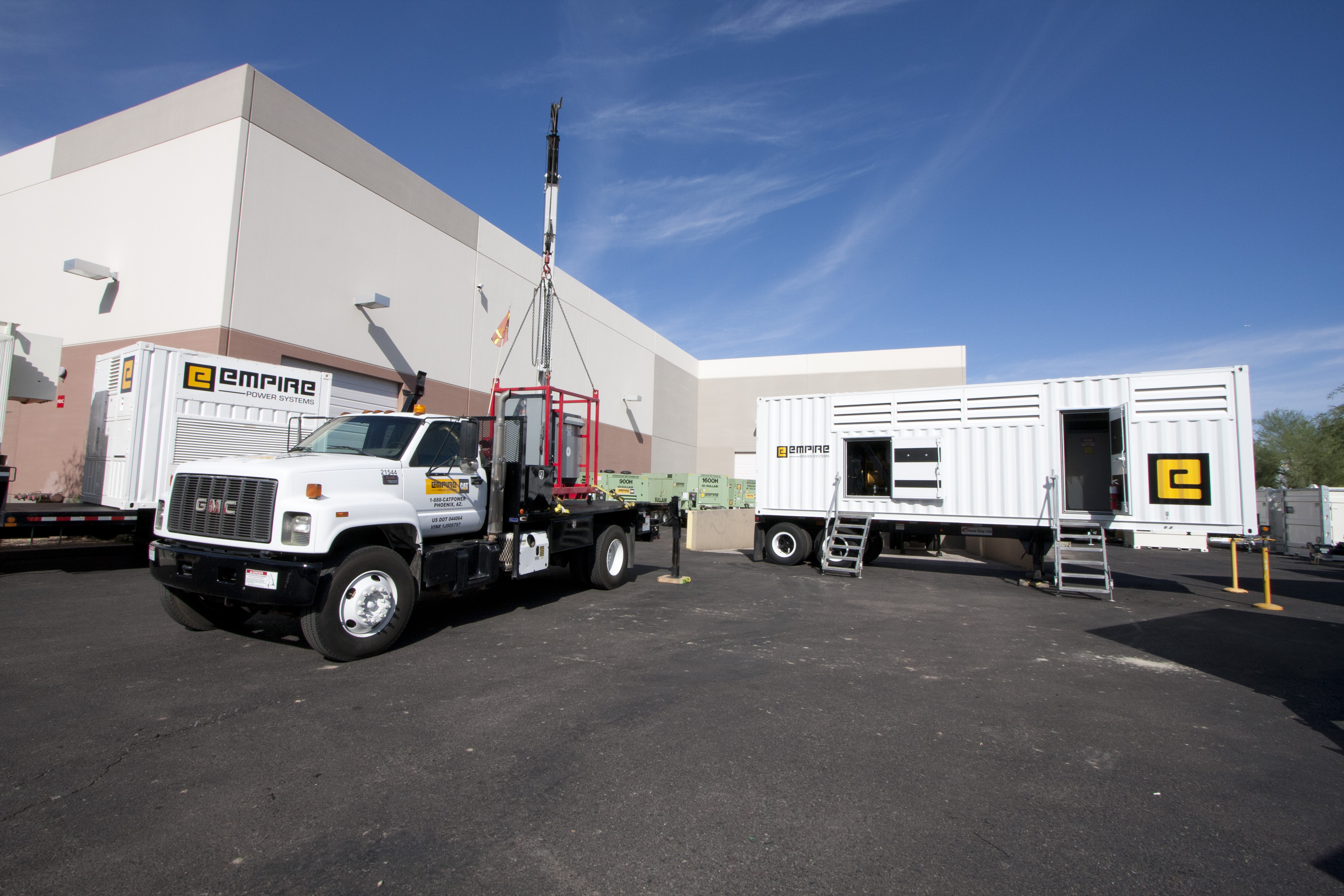
Empire is a local provider of power generation solutions for businesses like yours. Our solutions include new, used, and rental generators. We have the generator equipment you need now and the reliable parts and responsive maintenance capabilities you’ll need down the line.
We provide you with unmatched support, including comprehensive expertise on all our Cat generator equipment. If you need help sizing a generator or selecting the best one for your standby generation needs, contact us or stop by one of our power systems locations!